Table of Contents
When people think about building a lifelong exercise habit, they often focus on motivation, discipline, grit, and mental toughness. We admire people who wake up before sunrise to train, push through discomfort, and never seem to miss a workout. It’s easy to assume their success comes from sheer willpower.
While determination certainly plays a role, it is not the foundation of sustainable exercise.
The real foundation is nutrition.
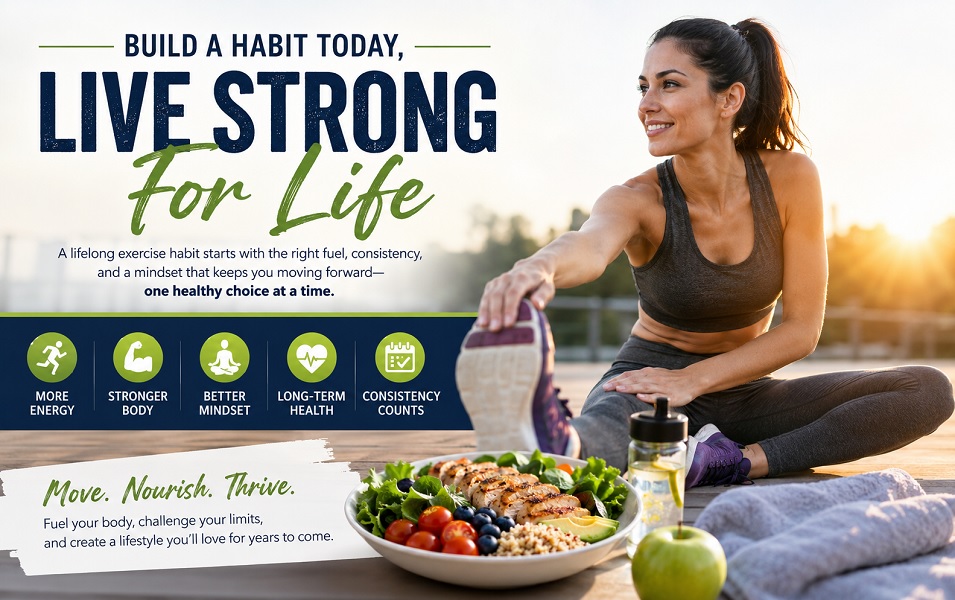
You can possess extraordinary discipline, unwavering commitment, and the strongest mindset imaginable, but if your body isn’t receiving the nutrients it needs, your exercise habit will eventually become difficult to maintain. Your body is like a high-performance engine—it needs the right fuel to produce energy, recover from exertion, adapt to training, and grow stronger. Without that fuel, even the most motivated person will eventually slow down.
If you want exercise to become a permanent part of your lifestyle, start by nourishing the body that makes movement possible.
Your Body Runs on What You Feed It
Every workout demands energy.
Whether you’re walking, lifting weights, practicing yoga, swimming, or running, your muscles, heart, lungs, and brain all rely on nutrients to perform efficiently. Food provides the carbohydrates that fuel movement, the protein that repairs muscles, the healthy fats that support hormones, and the vitamins and minerals that keep every system functioning properly.
When your nutrition is poor, your body begins sending warning signals:
- You feel tired before your workout even begins.
- Your muscles ache for days after exercising.
- Your strength and endurance plateau.
- Your motivation starts to disappear.
- Exercise begins to feel like a chore instead of something enjoyable.
Many people interpret these symptoms as laziness or a lack of discipline. In reality, their body is simply under-fueled.
Why So Many Exercise Habits Fail
One of the biggest reasons people quit exercising has nothing to do with motivation.
It’s because they never feel good while exercising.
Highly processed foods, excessive sugar, overeating, nutrient-poor meals, chronic dehydration, and inadequate protein intake can leave the body struggling to perform. Recovery becomes slower, soreness lasts longer, and energy levels remain low.
Eventually, every workout feels harder than it should.
When exercise consistently feels exhausting instead of energizing, it’s only natural to lose enthusiasm.
The problem isn’t your mindset.
The problem is your fuel.
Nutrition Makes Exercise Feel Better
When you consistently nourish your body with whole, nutrient-rich foods, something remarkable begins to happen.
You have more energy throughout the day.
Your workouts become more enjoyable.
Recovery becomes faster.
Your muscles feel stronger.
Your mood improves.
Instead of dragging yourself to the gym, you begin looking forward to moving your body because it feels good.
This creates one of the most powerful success cycles imaginable.
Better nutrition leads to better workouts.
Better workouts produce better results.
Better results increase motivation.
Greater motivation encourages consistency.
Consistency builds lifelong habits.
Recovery Is Where Progress Happens
Many people think progress occurs during exercise.
In reality, progress happens after your workout.
Exercise creates stress on the body.
Nutrition allows the body to repair that stress, build stronger muscles, replenish energy stores, and prepare for the next challenge.
Without adequate nutrition, your body never fully recovers.
Poor recovery often leads to:
- Persistent fatigue
- Reduced strength
- Increased injury risk
- Chronic soreness
- Burnout
Every workout should prepare you for the next one—not leave you feeling depleted for days.
Proper nutrition makes that possible.
Protein Is Essential for Long-Term Success
Protein is one of the most important nutrients for anyone trying to build a consistent exercise routine.
It helps repair muscle tissue after exercise, supports muscle growth, improves recovery, and helps maintain strength as you age.
Without enough protein, your body struggles to adapt to training.
Even moderate amounts of exercise become harder to recover from, making consistency much more difficult.
Including quality protein sources throughout the day can dramatically improve how your body responds to exercise.
Micronutrients Matter More Than You Think
Calories provide energy, but vitamins and minerals keep your body functioning efficiently.
Iron helps transport oxygen to working muscles.
Calcium supports healthy bones.
Magnesium assists muscle contraction and relaxation.
Potassium helps regulate fluid balance and nerve function.
Vitamin D contributes to muscle performance and bone health.
A diet rich in vegetables, fruits, whole grains, legumes, nuts, seeds, and lean proteins provides many of the micronutrients your body depends on every day.
Small nutritional deficiencies can quietly drain your energy long before you recognize what’s happening.
Hydration Is Part of Nutrition
Even mild dehydration can reduce exercise performance.
You may notice decreased endurance, reduced concentration, headaches, muscle cramps, or increased fatigue.
Drinking enough water before, during, and after physical activity helps regulate body temperature, transport nutrients, lubricate joints, and support recovery.
Sometimes what feels like exhaustion is simply dehydration.
Healthy Eating Builds Healthy Habits
Exercise and nutrition reinforce each other.
When people begin exercising consistently, they often become more mindful of what they eat because they don’t want to undo their hard work.
Likewise, when people begin eating healthier, they usually feel more energetic and naturally become more active.
Each healthy habit strengthens the other.
Rather than viewing nutrition and exercise as separate goals, think of them as partners working together to improve your health.
Focus on Progress, Not Perfection
Healthy eating doesn’t require perfection.
You don’t need to eliminate every treat, follow an extreme diet, or obsess over every calorie.
Instead, focus on building sustainable habits:
- Eat more whole, minimally processed foods.
- Include protein with every meal.
- Fill half your plate with fruits and vegetables.
- Choose whole grains more often.
- Drink plenty of water.
- Limit sugary drinks and highly processed snacks.
- Practice portion awareness instead of restriction.
Small improvements made consistently will always outperform short bursts of perfection.
Build a Body That Wants to Move
The ultimate goal isn’t simply exercising more.
It’s creating a body that feels energized, resilient, and capable of movement for decades to come.
When your body is properly nourished, exercise stops feeling like punishment and becomes something you genuinely enjoy. You recover faster, perform better, and experience the physical and mental rewards that make regular movement a natural part of life.
Motivation may get you started.
Discipline may keep you going for a while.
But nutrition is what gives your body the strength to make exercise a lifelong habit.
Final Thoughts
If you’ve struggled to maintain an exercise routine, don’t automatically assume you lack willpower. Before questioning your motivation, take a closer look at what you’re feeding your body.
Every healthy meal is an investment in your next workout.
Every nutritious choice supports better energy, faster recovery, stronger performance, and greater consistency.
The most successful exercisers aren’t simply the most disciplined—they’re the best fueled.
Feed your body well, and it will reward you with the energy, resilience, and vitality needed to move confidently for the rest of your life.